

Health & Safety
How Often Should Workplace Safety Training Be Refreshed?
May
Health and safety training is one of the most important investments a business can make, but training should never be viewed as a one-time exercise.
Over time, people forget procedures, bad habits develop, regulations change, and workplaces evolve. That’s why refresher training is essential for maintaining a safe, compliant, and competent workforce.
But how often should workplace safety training actually be refreshed?
The answer depends on several factors, including the type of work being carried out, the level of risk involved, and any changes within the business.
Why refresher training matters
Even experienced workers can become complacent over time. Refresher training helps to:
- Reinforce safe working practices
- Update workers on new procedures or legislation
- Correct unsafe habits before incidents occur
- Improve confidence and competence
- Demonstrate ongoing compliance
Without regular refreshers, important safety knowledge can fade surprisingly quickly.
Is refresher training a legal requirement?
UK health & safety legislation does not usually specify exact refresher intervals for every course. However, employers have a legal duty under the Health and Safety at Work etc. Act 1974 to provide appropriate information, instruction, training, and supervision. Training must also remain adequate and up to date.
In practice, this means employers should refresh training whenever:
- Skills or knowledge may no longer be current
- Risks change
- Unsafe behaviour is identified
- New equipment or processes are introduced
General guidance: how often should training be refreshed?
While requirements vary, many businesses follow these common timeframes:
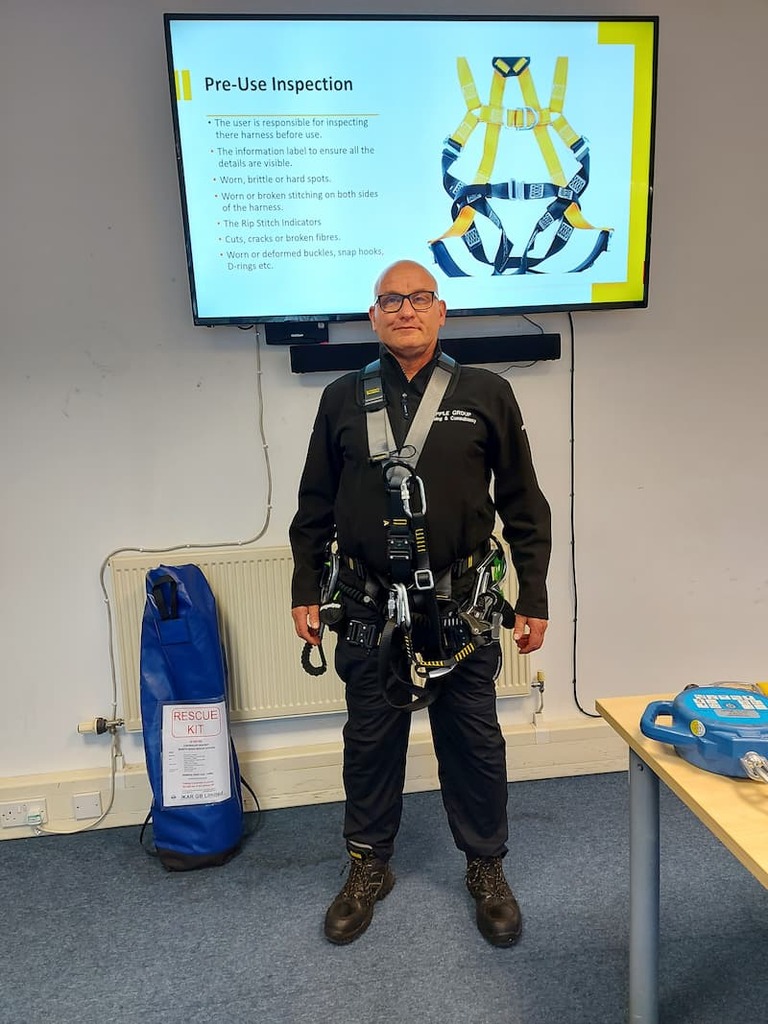
- Working at Height – Every 2-3 years
- PPE Inspection – Every 2-3 years
- Fire Safety/Fire Marshal – Annually or every 1-3 years
- First Aid at Work – Every 3 years
- Asbestos Awareness – Annually
- Power Tool Safety – Every 2-3 years
- Abrasive Wheels – Every 3 years or sooner if needed
These are general guidelines only. High-risk environments may require more frequent refreshers.
5 signs your workforce needs refresher training sooner
Sometimes waiting for a scheduled renewal isn’t enough. Businesses should consider immediate refresher training if they notice:
- Unsafe behaviours developing – Workers taking shortcuts or ignoring procedures is often a sign that standards need reinforcing.
- Near misses or accidents increasing – Incidents often highlight gaps in awareness, competence, or supervision.
- New equipment or processes introduced – Different tools, machinery, or work environments may require updated training.
- Long gaps since previous training – If workers cannot confidently explain procedures, knowledge may have faded.
- Changes in legislation or guidance – Safety standards evolve over time, and training should reflect current best practice.
Refresher training isn’t just repetition
Good refresher training does more than simply repeat old information. It should re-engage workers with real-world examples, reinforce practical skills, address current workplace risks, correct poor habits, and improve confidence and accountability. Practical, hands-on training is often far more effective than simply reviewing policies or slides.
The risks of outdated training
Failing to refresh training can lead to increased accidents and injuries, reduced compliance during inspections, poor safety culture, increased insurance and legal risk, and reduced employee confidence. In many workplace incidents, the issue isn’t that training never happened, it’s that it happened too long ago.
Building refresher training into your safety culture
The most effective businesses treat training as an ongoing process rather than a box-ticking exercise. A strong approach includes scheduled refresher training, toolbox talks and safety briefings, ongoing supervision and coaching, incident reviews and lessons learned, and clear training records and competency tracking. This keeps safety knowledge active rather than forgotten.
How Apple Group can help
At Apple Group, we provide practical workplace safety training and refresher courses tailored to real working environments. Our training helps businesses maintain compliance, reinforce safe behaviours, improve workforce competence, and reduce workplace incidents. From manual handling and working at height to PPE inspection and asbestos awareness, our courses are designed to keep teams safe, skilled, and confident.
Health & safety training is not something businesses should do once and forget about. Workplaces change, risks evolve, and people naturally fall out of practice over time. Regular refresher training helps ensure that safety knowledge stays current, procedures stay effective, and workers stay protected.