
Harness Safety
A Guide to Height Safety Harness Types: What Are the Differences and Benefits to the User When Working at Height?
20
Aug
Aug
Working at height is one of the riskiest activities across industries, from construction and roofing to telecoms and utilities. One of the most critical pieces of personal protective equipment (PPE) in these situations is the safety harness.But not all harnesses are the same, and using the right type of harness for the job can make all the difference between safe work and potential disaster. This guide explains the main types of safety harnesses designed for working at height, their differences, and the key benefits.
Why Harness Choice Matters at Height
When you’re working at height, a fall arrest system is often the last line of defence against serious injury or death. But the effectiveness of that system depends not just on wearing any harness, it depends on wearing the right one, properly fitted, and used in combination with the right equipment.Choosing the wrong harness, or using one incorrectly, can increase the risk of injury or reduce the chances of a successful rescue in the event of a fall.Main Types of Safety Harnesses for Working at Height
Fall Arrest (Full Body) Harness
A fall arrest harness is the most common harness for working at height, and is designed to stop a fall safely by distributing impact forces across the body. This full body harness is best for general construction, scaffolding, roofing, and maintenance at height.Benefits of fall arrest harnesses:- Dorsal D-ring on the back for fall arrest lanyard connection
- Even force distribution reduces injury risk during a fall
- Adjustable fit for comfort and secure wear
Work Positioning Harness
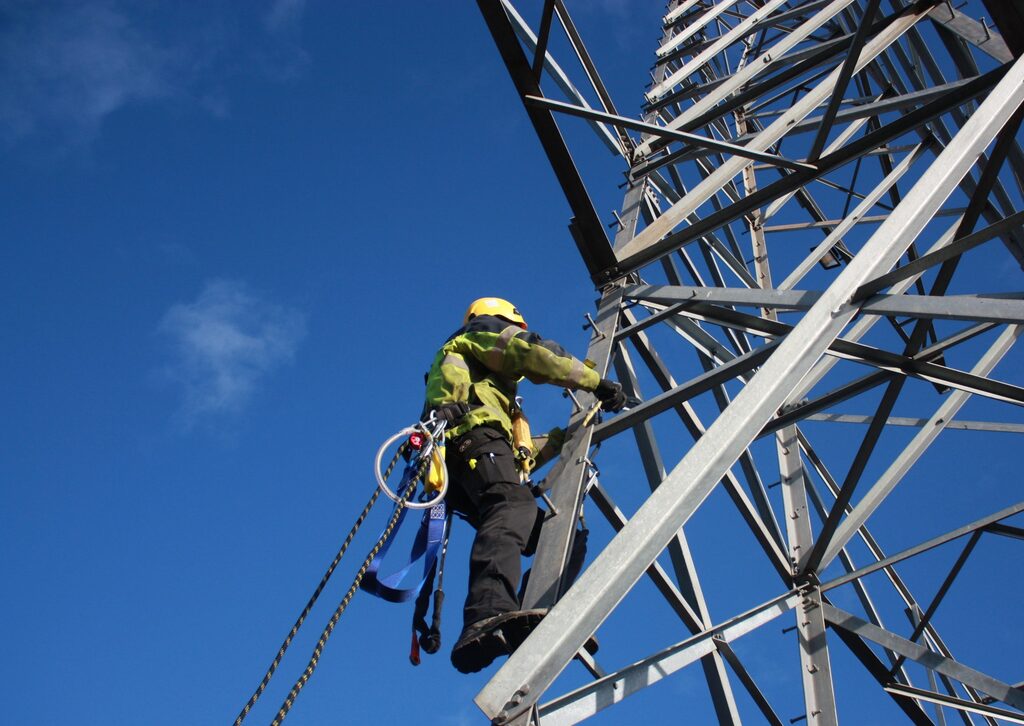
A work positioning harness allows the user to work hands-free while suspended or leaning, using side D-rings connected to positioning lanyards. This type of harness is ideal for telecom masts, tower work, utility poles, and arborists.Benefits of work positioning harnesses:- Provides support and balance while working at height
- Reduces muscle fatigue by shifting weight to the harness
- Allows precise and secure work in hard-to-reach places
Suspension Harness (Rope Access)
Suspension harnesses are specifically designed for tasks that require prolonged suspension, often with additional padding and multiple attachment points. This harness is best for rope access work, window cleaning on high-rise buildings, and industrial maintenance.Benefits of suspension harnesses:- Enhanced comfort during long periods hanging in a harness
- Padded leg straps and waist support to prevent suspension trauma
- Multiple D-rings for ropes, tools, and equipment
Retrieval (Rescue) Harness
A retrieval harness includes shoulder D-rings for vertical raising or lowering, and is used for confined space or rescue situations at height. This type of safety harness is ideal for confined space entry at height (e.g., tanks, silos) and rescue operations.Benefits of retrieval harnesses:- Enables safe extraction after a fall or in an emergency
- Designed for both fall arrest and retrieval scenarios
- Works with tripod and winch systems for confined spaces
Key Features to Look For in a Height Safety Harness
Regardless of type, a height safety harness should include:- Compliance with EN361 (UK/EU standard) for fall arrest
- Strong, durable materials suitable for outdoor or tough site conditions
- Adjustable straps for a secure and comfortable fit
- Clear labelling and instructions for use and inspection
- Optional features like quick-release buckles, high-visibility colours, or added lumbar support can increase usability and worker comfort.
How to Choose the Right Harness for Working at Height
When choosing the right harness for working at height, ask the following questions:- What task will the worker perform at height? (e.g., fall arrest, work positioning, rope access)
- How long will they be at height? (short tasks vs. prolonged suspension)
- What environment will they work in? (open scaffolding, towers, confined spaces)
- What equipment will it need to integrate with? (lanyards, fall arresters, anchor points)
Why Training Is Just as Important
Remember, even the best harness won’t protect a worker without proper training. Workers must know how to:- Select the right harness for the task
- Fit and adjust it correctly
- Check it before use
- Use it safely with compatible equipment
- Understand emergency rescue procedures