

Power Tools Safety Training
How to Identify the Hazards and Risks When Using Power Tools in the Workplace
04
Dec
Dec
Power tools are a mainstay of modern workplaces, from construction sites and workshops to maintenance departments and manufacturing facilities. They make work faster, more efficient, and often more precise.But with that speed and convenience comes risk. Each year in the UK, thousands of injuries are caused by improper or unsafe use of power tools. The key to preventing these incidents lies in one fundamental process: identifying hazards and assessing risks before you start work.At Apple Group, we deliver hands-on safety training across a wide range of industries, helping businesses stay compliant and keep their teams safe. In this article, we’ll show you how to identify power tool hazards, assess the associated risks, and put effective controls in place.
Focus first on high-risk hazards, implementing immediate control measures such as improved guarding, PPE, supervision, or alternative tools.
Understanding the Difference Between a Hazard and a Risk
These two terms are often confused, but they mean very different things:A hazard is something with the potential to cause harm. For example, a rotating saw blade, trailing power cable, or faulty trigger switch.A risk is the likelihood that harm will occur and how severe it might be. For example, using a saw with a missing guard greatly increases the risk of injury.By identifying both the hazard and the risk, you can take proportionate action to control or eliminate it.Common Hazards When Using Power Tools
Let’s look at the main categories of hazards you’ll encounter when using electric, battery-powered, or pneumatic tools.Mechanical hazards
- Rotating parts, blades, discs or bits can cause cuts, punctures or entanglement.
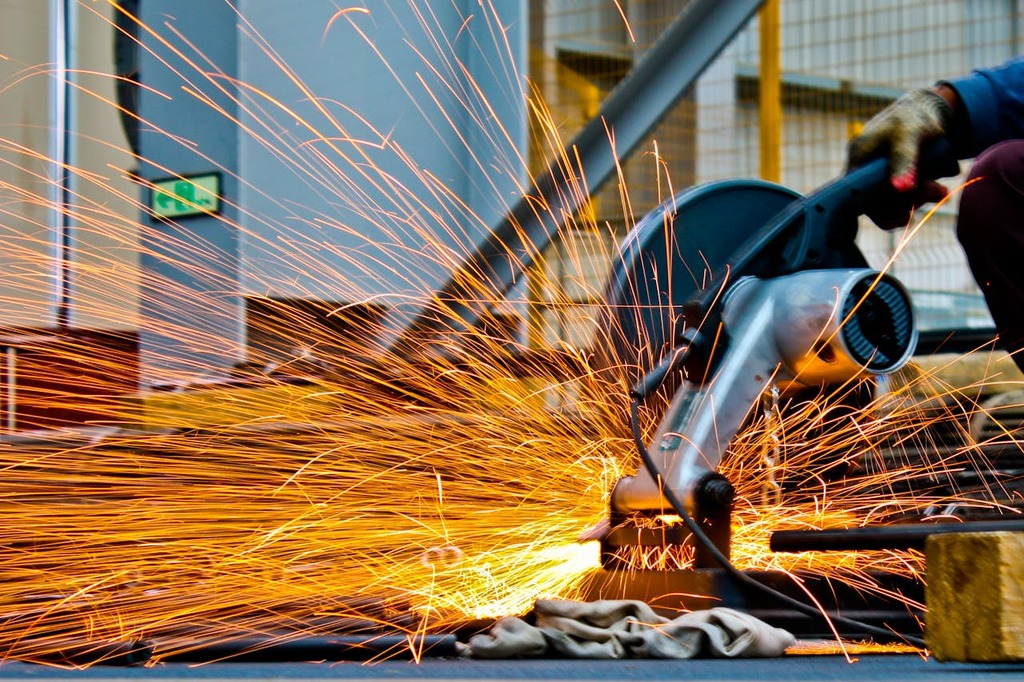
- Flying debris or projectiles from drilling, cutting or grinding can injure eyes or skin.
- Ejected parts or tool kickback can cause impact injuries or loss of control.
Electrical hazards
- Damaged cables, plugs or insulation can lead to electric shock or fire.
- Using 240V tools in damp or outdoor conditions without RCD protection increases danger.
Noise and vibration hazards
- Prolonged use can cause hearing loss or Hand–Arm Vibration Syndrome (HAVS).
- Tools such as grinders, breakers or nail guns often exceed safe exposure limits if unmonitored.
Ergonomic hazards
- Repetitive movements, awkward postures, or heavy tools can lead to musculoskeletal injuries.
- Poor workstation setup or working at height can increase fatigue and error.
Dust, fumes, and other environmental hazards
- Grinding, cutting, or sanding can create airborne dust including silica, wood dust, or metal particles which may cause respiratory illness.
- Combustion tools (e.g. petrol-powered saws) can release harmful fumes in enclosed spaces.
Operational hazards
- Lack of training or supervision.
- Inadequate PPE (eye, ear, or hand protection).
- Distractions, fatigue, or rushing work.
How to identify hazards on-site
The most effective way to spot hazards is to follow a structured process:- Observe the task – Watch how the tool is being used in real conditions, not just how it should be used. Identify unsafe behaviours or shortcuts.
- Inspect the tool – Check cables, guards, switches, and moving parts before use. Look for signs of damage, wear, or modification.
- Consider the environment – Is the work area dry, well-lit, and free from trip hazards? Is there enough ventilation or noise control?
- Talk to workers – Ask operators what issues they’ve experienced as they often spot hazards that go unnoticed during audits.
- Review manufacturer guidance – Every tool should come with a manual detailing its safe operation, inspection intervals, and required PPE.
Assessing the Level of Risk
Once hazards are identified, assess how likely and how severe harm could be if nothing changes.A simple risk matrix helps you score and prioritise them:| Severity | Likelihood | Risk level |
| Minor injury (e.g. small cut) | Unlikely | Low |
| Serious injury (e.g. fracture, electric shock) | Possible | Medium |
| Fatal or life-changing injury | Likely | High |
Controlling the Risks
Follow the HSE’s hierarchy of control to manage power tool risks effectively:- Eliminate – Avoid using power tools where possible (e.g. use pre-cut materials).
- Substitute – Use safer, lower-risk tools or battery models instead of mains-powered ones.
- Engineer controls – Add guards, dust extraction, and RCDs.
- Administrative controls – Train staff, schedule breaks, and display safety signage.
- PPE – Provide gloves, eye protection, hearing protection, and dust masks where required.