
When Do You Need to Wear a Safety Harness at Work?
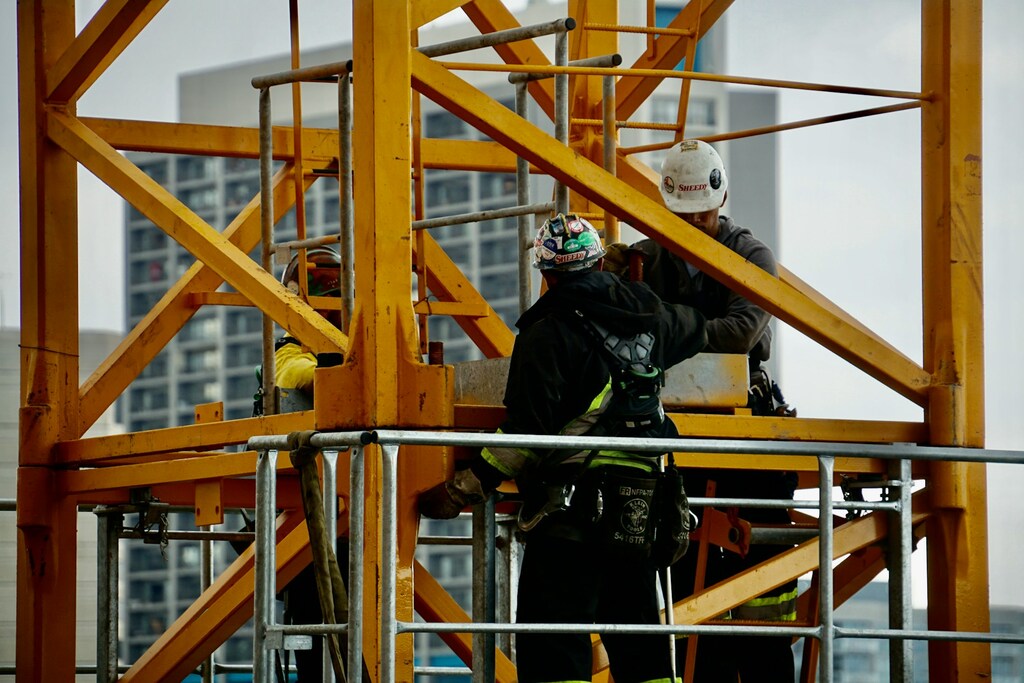
Safety harnesses are an important form of fall protection for many people who work at height. From roof work and maintenance to construction, engineering and access equipment, a correctly selected and fitted harness can help protect a worker where there is a risk of falling.But when do you actually need to wear one? A common misconception is that UK law requires everyone working above a particular height to wear a safety harness. In reality, deciding whether a harness is required depends on the work being carried out, the risk of a fall and the other protective measures available.In this guide, we’ll explain when a safety harness may be required at work, what employers need to consider and why wearing a harness is only one part of an effective fall protection system. 

What counts as working at height?

Under the Work at Height Regulations 2005, work at height broadly means work in any place where a person could fall a distance liable to cause personal injury if suitable precautions were not taken.This means working at height isn’t limited to particularly tall buildings or structures. Examples can include working on roofs, ladders, scaffolding, MEWPS, near open edges, on elevated platforms, on structures or machinery, or over openings or voids.Even relatively small falls can cause serious injuries, so employers need to assess the actual risk rather than relying solely on the distance from the ground. 

Is there a minimum height for wearing a safety harness?

One of the most common questions is: At what height do I legally need to wear a harness? There isn’t a single minimum height at which UK law automatically requires a safety harness. You may still hear references to a 2-metre rule, but this should not be used as a universal threshold for deciding whether fall protection is required.The key consideration is whether there is a risk of a fall liable to cause personal injury. This means fall protection could be necessary below two metres if the circumstances create a significant risk. 

When might you need to wear a safety harness?

A safety harness may be required when a risk assessment identifies a fall risk that cannot be adequately controlled through other measures.Examples may include situations where workers are working near an exposed edge, working on certain roofs, using MEWP, working from fixed access systems, working on towers or structures, carrying out maintenance at height, working where guardrails cannot be installed, or using fall restraint or arrest systems.However, simply working at height doesn’t automatically mean a harness is the correct solution. The entire task and working environment need to be assessed first. 

Avoid working at height where possible

The first consideration should always be whether the work at height can be avoided altogether.For example, could the task be completed from ground level, carried out using extendable equipment, prepared or assembled at ground level, or redesigned to remove the need to work at height? Removing the need to work at height eliminates the fall risk rather than attempting to control it. 

Collective protection should be considered before personal protection

Where work at height cannot be avoided, employers should consider measures that prevent falls and protect everyone in the work area. This could include guardrails, working platforms, scaffolding and edge protection.These are forms of collective protection because they don’t rely on each individual worker correctly attaching or operating personal equipment. Safety harnesses are a form of personal protection and may become appropriate where collective measures cannot adequately control the risk. 

Fall restraint vs fall arrest

If a harness is required, it’s important to understand what the system is designed to achieve. Two common approaches are fall restraint and fall arrest.Fall restraintA fall restraint system is designed to prevent the worker from reaching a position where they could fall. For example, a worker may wear a harness attached to a suitably configured restraint system that prevents them from reaching an exposed roof edge. The aim is to prevent the fall from happening in the first place.Fall arrestA fall arrest system is designed to stop a person after a fall has occurred. The system may include a full-body harness, lanyard or fall arrest device, energy-absorbing equipment, and an anchor point.Fall arrest introduces additional considerations because the person can still fall before the system stops them. That means issues such as fall distance, clearance, anchor position and rescue arrangements need careful consideration. 

When might a harness be required on a roof?

Roof work can involve several significant fall hazards, including open edges, fragile surfaces, roof openings, skylights, and changes in level.A harness may form part of the protection system where other methods cannot adequately control these risks.However, putting someone in a harness shouldn’t be treated as a substitute for appropriate edge protection or other collective measures where these can reasonably be provided. 

Do you need a harness in a MEWP?

Whether a harness is appropriate when using a mobile elevating work platform depends on factors including type of equipment, the task, manufacturer’s instructions and the risk assessment.For some types of MEWP, personal fall protection may be required to reduce the risk of workers being thrown or falling from the platform.The correct equipment and attachment method need to be selected for the specific situation. Simply wearing a harness without understanding how and where it should be attached can introduce additional risks. 

Do you need a harness on scaffolding?

Workers using properly constructed scaffolding with suitable platforms and edge protection may already be protected by collective fall prevention measures.However, harnesses may be required during activities such as the erection, alteration or dismantling of scaffolding, depending on the system of work and risks involved.Again, the requirement should be determined by proper planning and risk assessment rather than a blanket rule. 

Do you need a harness when using a ladder?

Wearing a harness is not automatically required simply because someone is using a ladder. Employers should first determine whether a ladder is suitable for the task.Factors include duration of work, height involved, working environment, need to carry tools or materials, ability to maintain safe contact, and availability of safer access equipment.For some specialised ladder or fixed access systems, additional fall protection may be necessary. 

A harness is only one part of the system

One of the biggest safety mistakes is assuming that simply putting on a harness makes working at height safe. A harness needs to be part of a properly designed system.Depending on the application, this may include harness, lanyard, connectors, anchor points, energy absorber, lifeline, fall arrest device, and rescue equipment.Every component needs to be suitable and compatible. Attaching a good harness to an unsuitable anchor point, for example, does not create a safe fall protection system. 

Safety harnesses must be inspected

Harnesses and associated equipment can become damaged through wear, contamination, UV exposure, chemicals, poor storage and general use.Users should carry out appropriate pre-use checks and look for issues such as cuts or tears, damaged webbing, frayed fibres, broken stitching, damaged buckles, corrosion, distorted D-rings, and chemical or heat damage.Appropriate formal inspections should also be carried out in accordance with applicable requirements, manufacturer guidance and the organisation’s inspection regime. If there’s any doubt about the condition of a harness, it should not simply be used and hoped for the best. 

You also need a rescue plan

Fall protection doesn’t end when a fall is arrested. If someone falls and is left suspended in a harness, they need to be rescued promptly using an appropriate planned procedure.Employers therefore need to consider how the person will be reached, what rescue equipment is required, who will carry out the rescue, whether rescuers are appropriately trained, and how quickly the rescue can be performed.Relying solely on the emergency services is not a substitute for appropriate workplace rescue planning. 

Do workers need training to use a safety harness?

Anyone required to use fall protection equipment should have appropriate information, instruction and harness training for the equipment and task involved.Workers need to understand areas such as how to inspect a harness, how to fit and adjust it correctly, appropriate attachment points, the difference between restraint and arrest, and safe working practices.Without suitable knowledge, even high-quality fall protection equipment can be used incorrectly. 

How do you decide whether a harness is needed?

Rather than asking how high someone can work before they need a harness, employers should assess the complete task. This provides a much safer approach than relying on an arbitrary height measurement.Consider: Can working at height be avoided? What are the potential hazards? Can collective protection prevent the fall? If not, what personal fall protection is appropriate? Have users received training? Has the equipment been inspected? What happens if someone does fall? 

When a safety harness needs to be worn in the workplace.

There is no single height at which every worker in the UK automatically has to put on a safety harness. The requirement depends on the risk of falling, the task being carried out, and the control measures available.Where possible, work at height should be avoided. Where it cannot be avoided, collective fall protection should be considered before relying on personal equipment such as harnesses. When a safety harness is required, it needs to be correctly selected, fitted, inspected and used as part of a suitable fall protection system. Workers also need the knowledge and training to use that equipment safely.Apple Group provides practical harness awareness and working-at-height training designed to help employees understand fall risks, inspect and use safety equipment correctly and work more safely when operating at height.